Overview
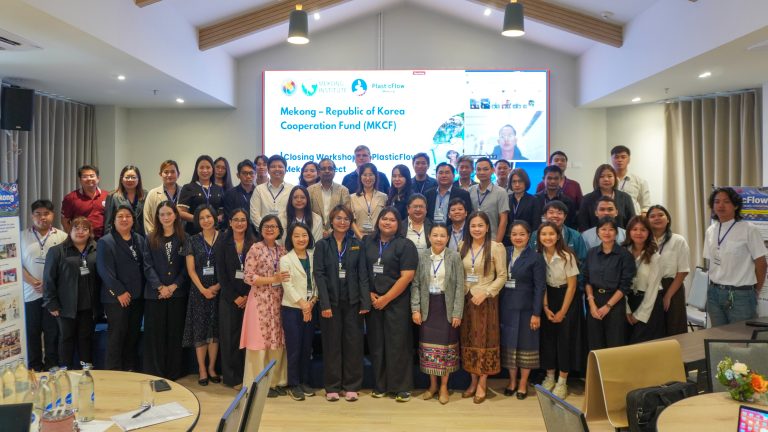
The Geoinformatics Center (GIC) of Asian Institute of Technology organized a two-day workshop titled “Closing Workshop for PlasticFlow Mekong Project”, with support from the Mekong-Republic of Korea Cooperation Fund (MKCF). The event was held from 26-27 May 2026. This workshop served as the culmination of our regional efforts, providing a platform to share key achievements, disseminate lessons learned, and discuss future sustainability and scale-up strategies as well as acknowledge contributions. The final workshop comprised of in-person events, combining formal presentations with interactive sessions and field visits to different project sites in Bangkok.
Workshop Highlights
Day 1
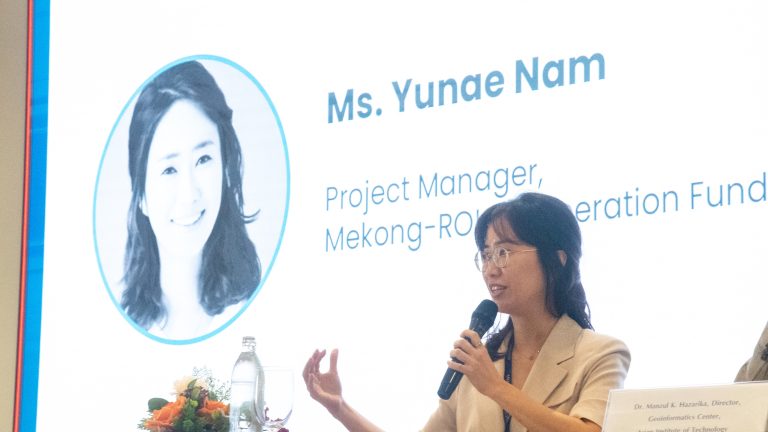
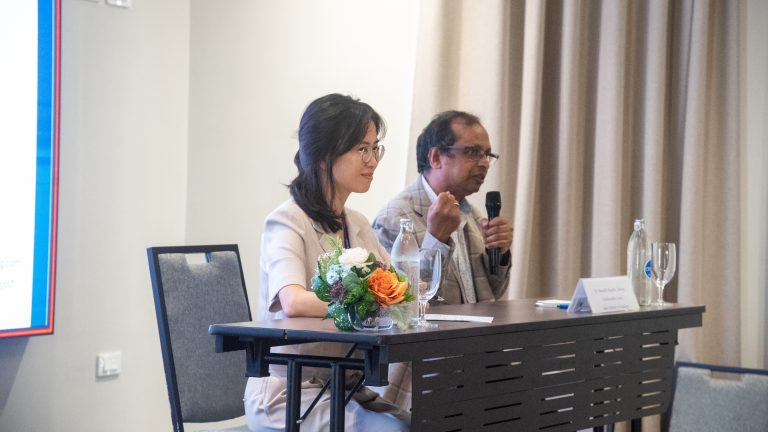
The event began with welcome remarks from Dr. Manzul Kumar Hazarika, Director of GIC, and Ms. Yunae Nam, Project Manager at the Mekong–ROK Cooperation Fund (MKCF), who congratulated the project team and partners on successful implementation of the project.
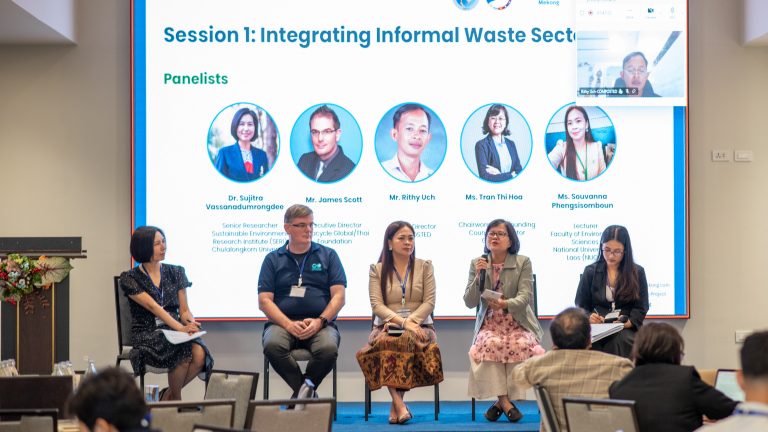
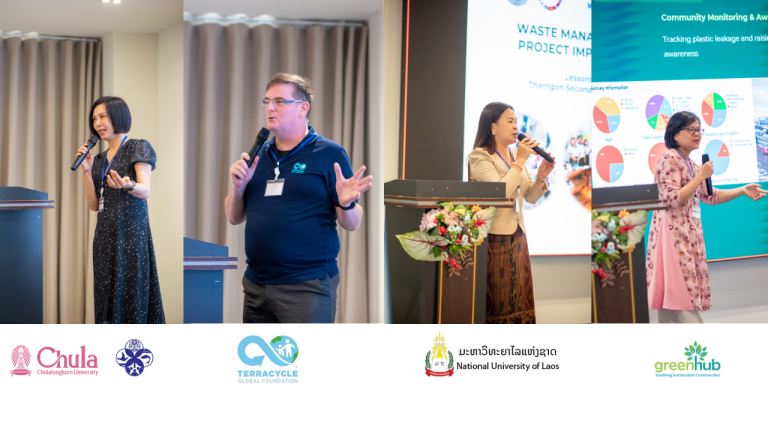
The first session featured a panel discussion on “Integrating Informal Waste Sector” with panelists Dr. Sujitra Vassanadumrongdee, Senior Researcher, Chulalongkorn University; Mr. James Scott, Executive Director, TerraCycle Thai Foundation; Ms. Souvanna Phengsisomboun, Lecturer, National University of Laos (NUOL); Ms. Tran Thi Hoa, Chairwoman of Founding Council, Director, GreenHub, and Mr. Rithy Uch, Deputy Director, COMPOSTED. The session was moderated by Ms. Ushnish Tuladhar, Research Associate at GIC. The discussion explored the role of informal waste workers in the Mekong region, existing integration approaches, key challenges, and recommendations for strengthening their inclusion in formal waste management systems.
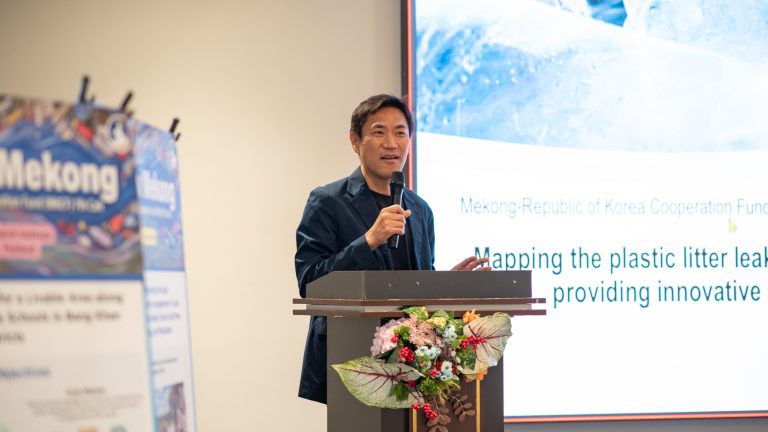
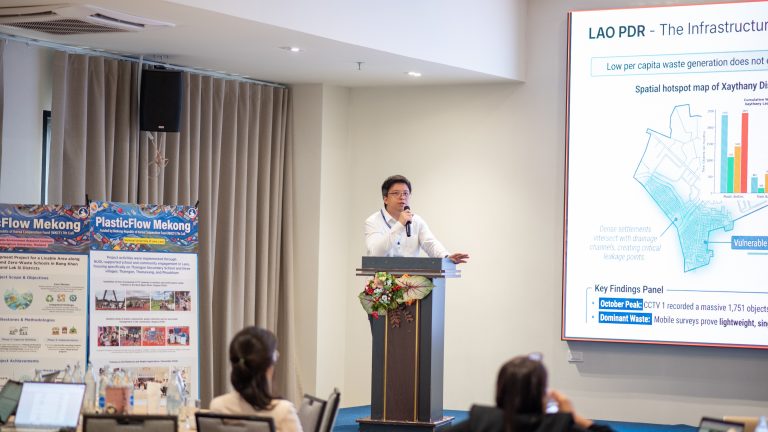
In the second session, Mr. Tsukiji Makoto, Project Manager of the PlasticFlow Mekong Project, presented the project’s key findings and impacts across the four participating countries. Each of the country partners—SERI, TerraCycle, NUOL, GreenHub, and COMPOSTED, shared their major achievements and lessons learned. Dr. Kittiphon Boonma, Research Specialist at GIC and Project Coordinator of the PlasticFlow Mekong Project, presented trends in plastic flow observed through AI-CCTV monitoring, highlighting how plastic leakage patterns are influenced by both hydrological factors, such as seasonal changes, and cultural factors, including festivals.
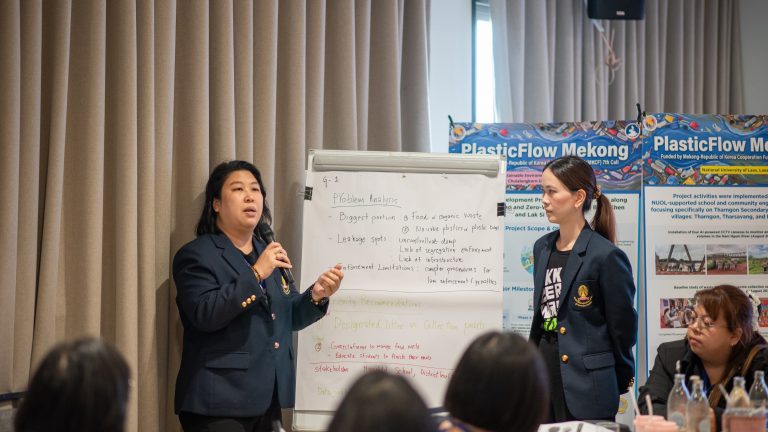
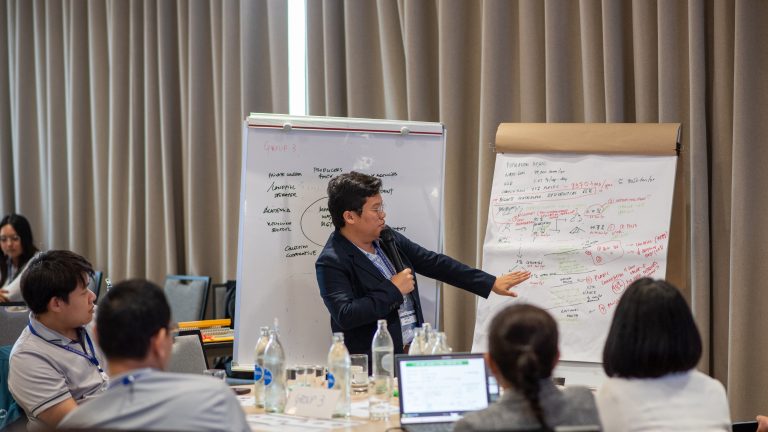
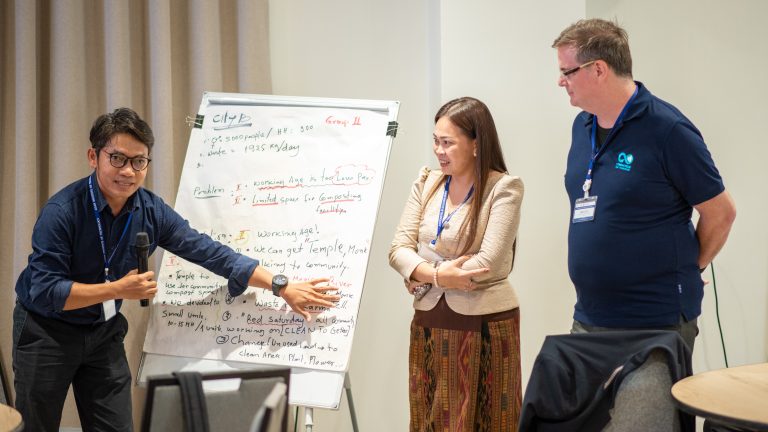
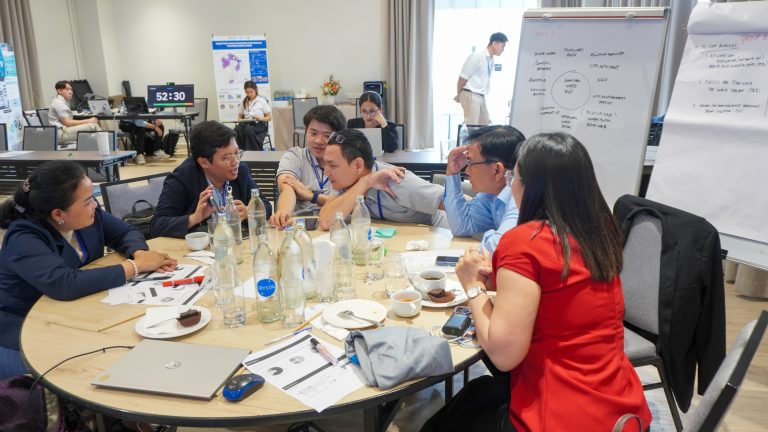
The workshop also included group exercises based on waste and plastic management case studies, facilitated by Ms. Tuladhar. Participants worked collaboratively to develop structured waste management solutions and formulate a consolidated set of policy recommendations for addressing plastic pollution in the Mekong region.
The first day concluded with a brainstorming session on future project opportunities, followed by closing remarks from Mr. Makoto. He summarized the key discussions and outcomes of the workshop and expressed acknowledgement to the donor, organizers, country partners, and community members for their contributions to the successful implementation of the PlasticFlow Mekong Project.
Day 2
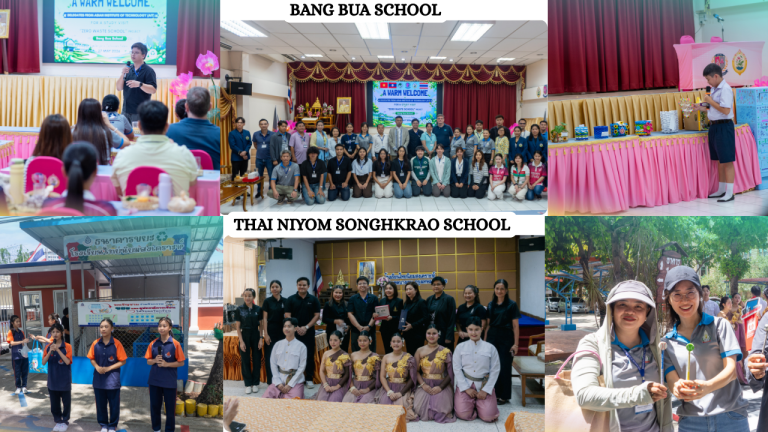
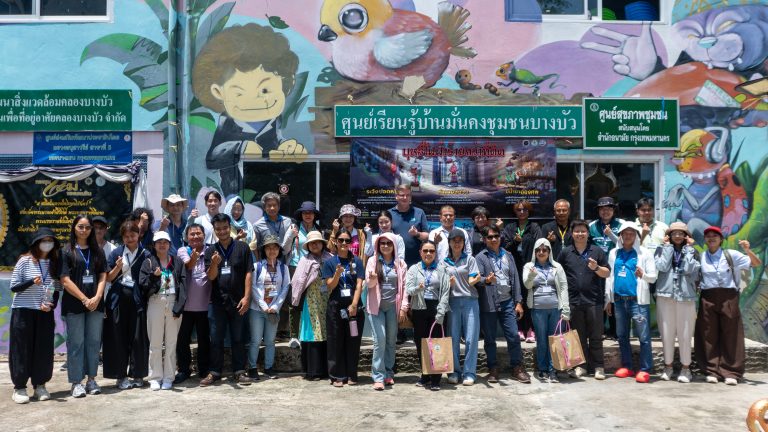
On the second day, field visit to few of the project implementation locations in Bangkok, Thailand was conducted. The first stop was Bang Bua School, one of the project’s Zero-Waste Schools established in partnership with SERI. During the visit, participants learned how the school integrates environmental education into daily activities and encourages students to take an active role in waste reduction and recycling. The school showcased several sustainable practices, including milk carton collection, a DIY herbal learning zone, and creative products made from recycled plastics, cardboard, and bottle caps by students.
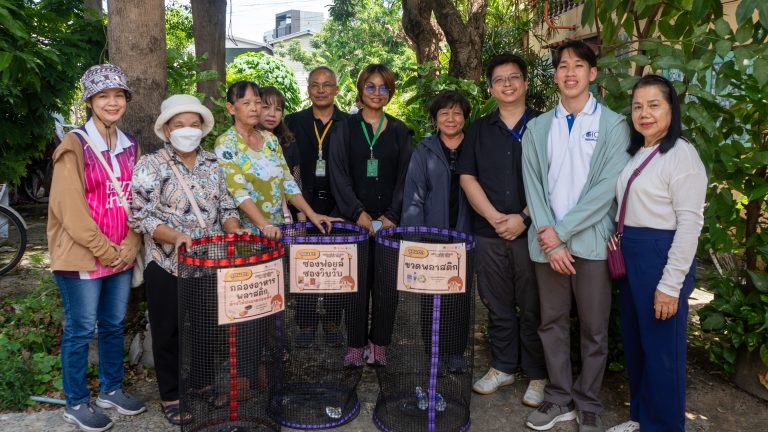
The group then visited Thai Niyom Songkhrao School, where they observed several sustainability initiatives supported by the Bang Khen District Office, including composting activities, a garbage bank, and a waste drop-off station where students could exchange 5–10 plastic bottles for a pencil. These initiatives demonstrated practical approaches to fostering waste segregation and environmental awareness among young students. The group also visited Bang Bua community, a riverine community located along Bang Bua canal where SERI and GIC-AIT implemented project activities, including waste awareness campaigns, community engagement initiatives, and AI-CCTV-based monitoring of plastic waste leakage.
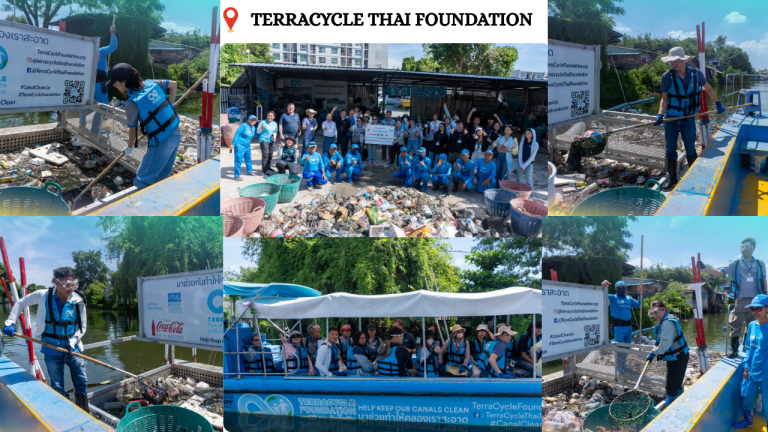
The field visit concluded at the TerraCycle Thai Foundation, where participants gained hands-on experience in collecting waste from canal waste traps and sorting recyclable and non-recyclable materials. During the activity, the team collected a total of 216 kg of waste from the Lat Phrao Canal. The exercise provided valuable insights into the operational challenges of waste recovery, the composition of canal waste, and the importance of interception systems in preventing plastic leakage into waterways.
Related links: