Overview
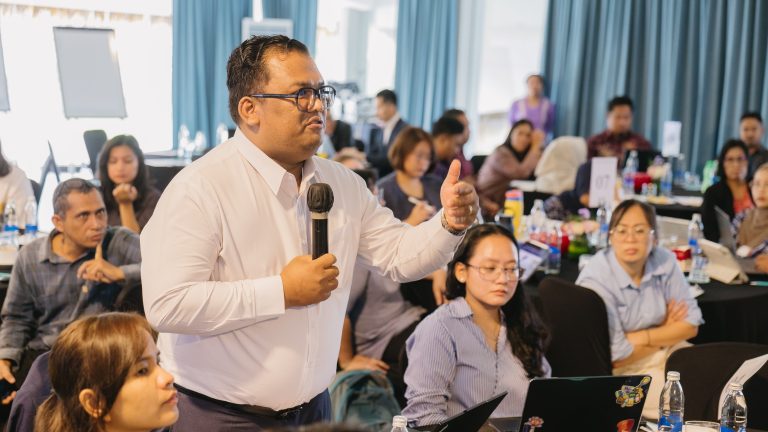
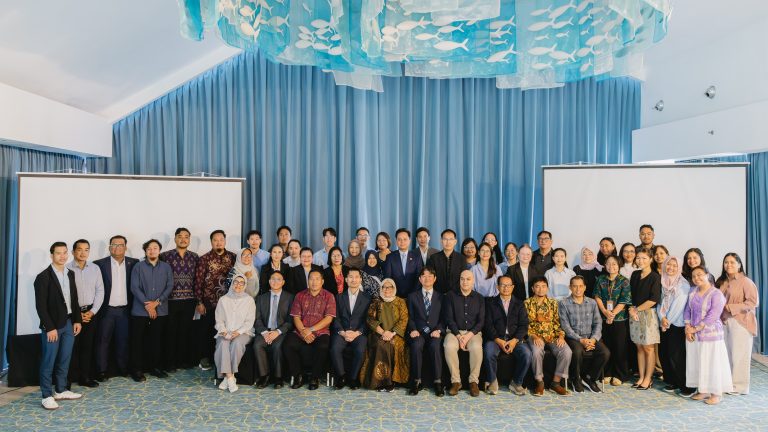
The Geoinformatics Center (GIC) was invited as one of the trainers for the DECIDE (Data and Evidence to Catalyze Informed Decision-making and Engagement) workshop held in Bali, Indonesia, from 2–4 December 2025. The workshop was organized by the Economic Research Institute for ASEAN and East Asia (ERIA) under the CIRCONOMICS project. The training aimed to provide a platform for government officers, municipalities, and researchers to enhance technical skills, exchange knowledge, and collaborate toward evidence-based approaches to plastic pollution monitoring in line with national and regional priorities.
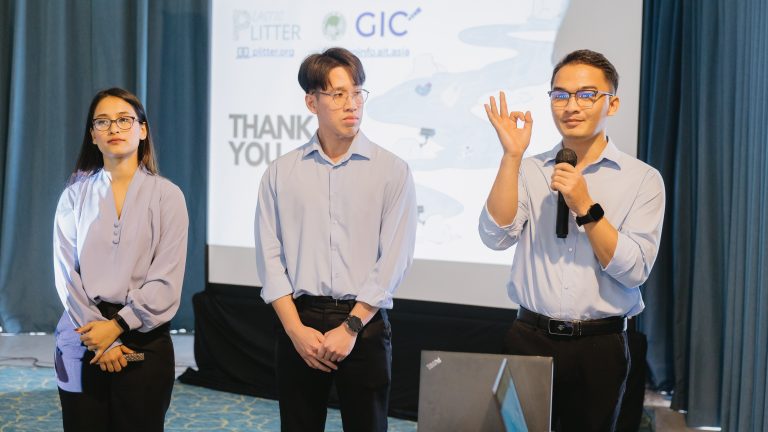
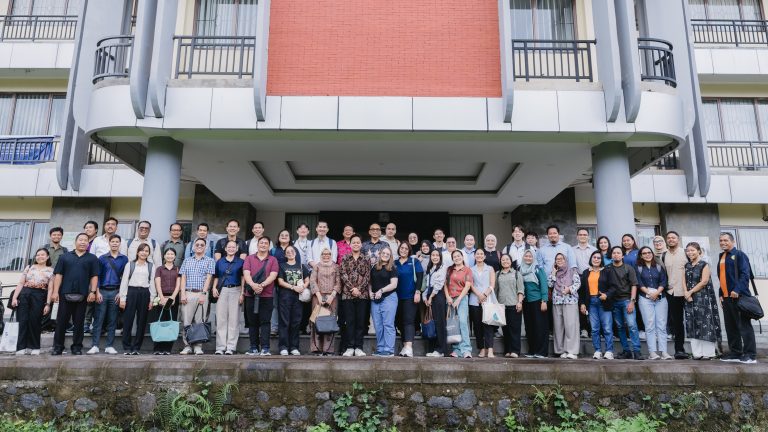
The workshop was attended by 34 participants from various government organizations, universities, and municipalities in Indonesia, the Philippines, Cambodia, Laos, and Thailand. The GIC team was led by Ms. Ushnish Tuladhar along with Mr. Karun Mooksrisai, and Mr. Nguyen Cong Hau.
Workshop Highlights
Day 1
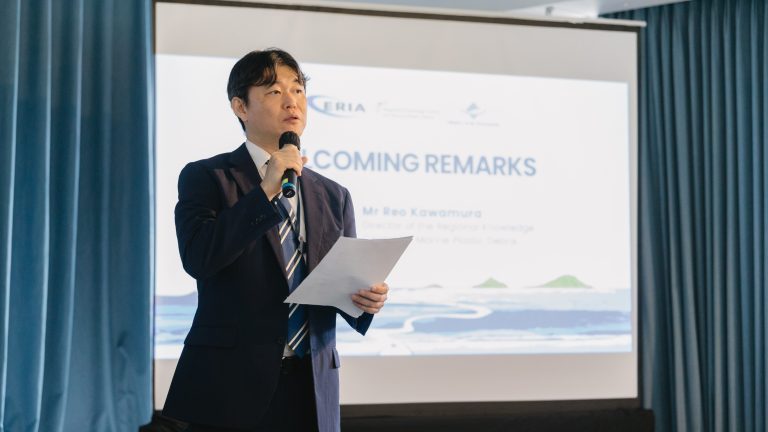
Mr. Reo Kawamura, Director of Environmental Policy & RKC-MPD ERIA, and Prof. Ir. Emenda Sembiring, IPPH Coordinator, delivered the opening remarks for the workshop, welcoming both speakers and participants. The first session was led by Mr. Indradhi Faisal Ibrahim, Capacity Building Expert at RKC-MPD ERIA, who introduced the event objectives and presented on “Introduction and Overview of Plastic Pollution Monitoring in ASEAN.”
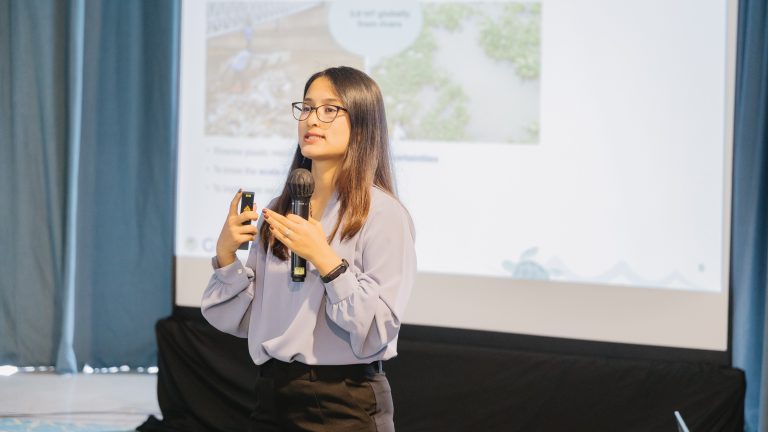
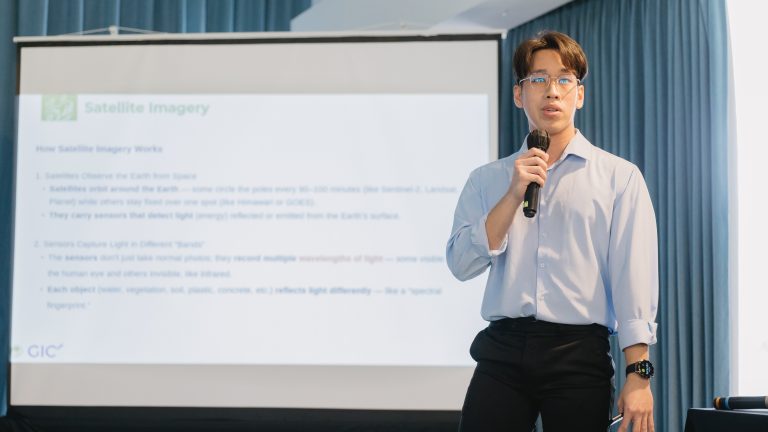
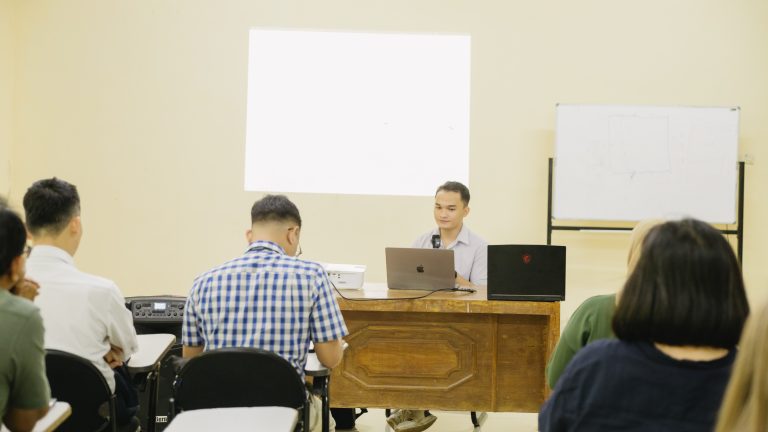
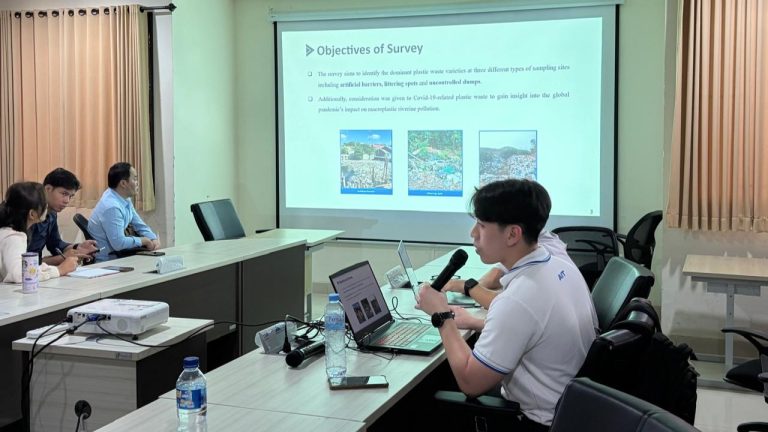
Ms. Ushnish Tuladhar and Mr. Karun Mooksrisai delivered the keynote presentations for the second session, titled “Plastic Pollution Monitoring Tools and Methodologies”. Ms. Tuladhar provided an overview of several monitoring techniques for river environments, such as visual counting, net-based sampling, and others. Mr. Mooksrisai then introduced the fundamentals of remote sensing and illustrated how satellite imagery can be applied to detect plastic waste using a step-by-step demonstration. Toward the end of the session, pLitter AI-CCTV, an automated river-based camera system for plastic detection was introduced by Ms. Tuladhar highlighting its main features and deployment locations.
Day 2
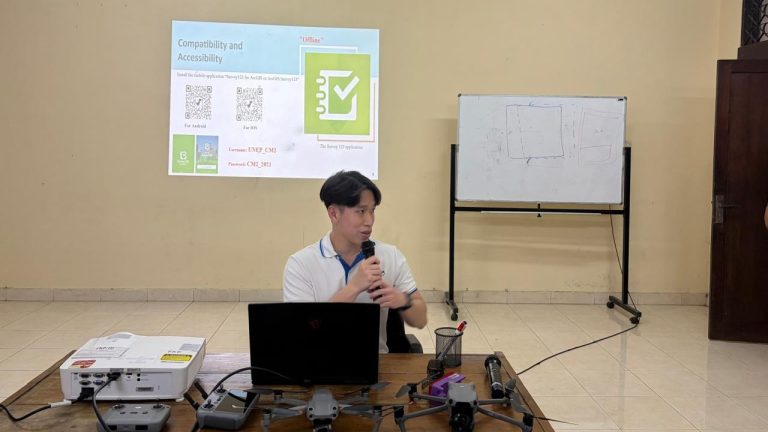
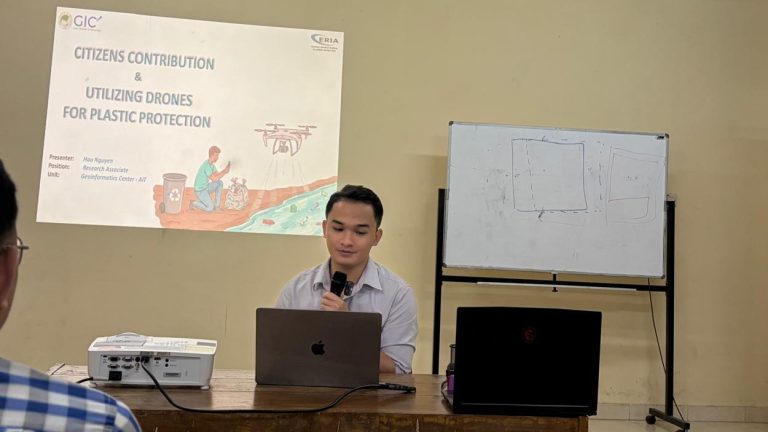
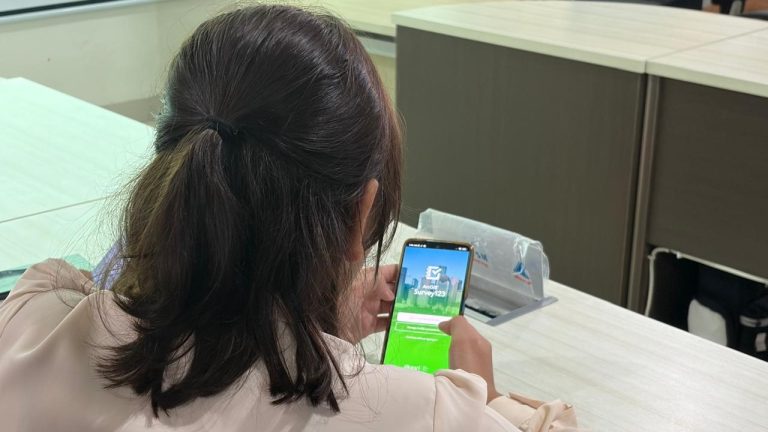
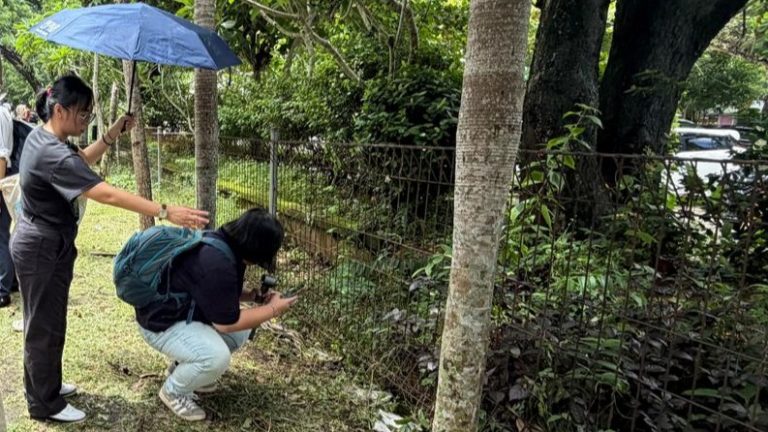
Day 2 focused on practical demonstrations and hands-on training for participants on monitoring tools such as drones, mobile applications, and microplastic identification at Udayana University in Bali. Mr. Nguyen and Mr. Mooksrisai facilitated group exercises on “Macroplastic Identification Using Drones and Mobile Apps,” followed by an on-field survey using the pLitter mobile app for land-based plastic monitoring. In the afternoon, Mr. Mooksrisai visualized the survey results using our data dashboard and explained how the collected data contributes to generating plastic leakage maps.
Day 3
On the final day, participants joined a field trip to plastic waste management sites in Bali, including the Seven Clean Seas Plastic Waste Collection Project and the WeDoo Workshop Facility. The visit featured demonstrations of waste collection technologies and hands-on experience in plastic recycling using injection molding and extruder sculpting techniques.