
Overview
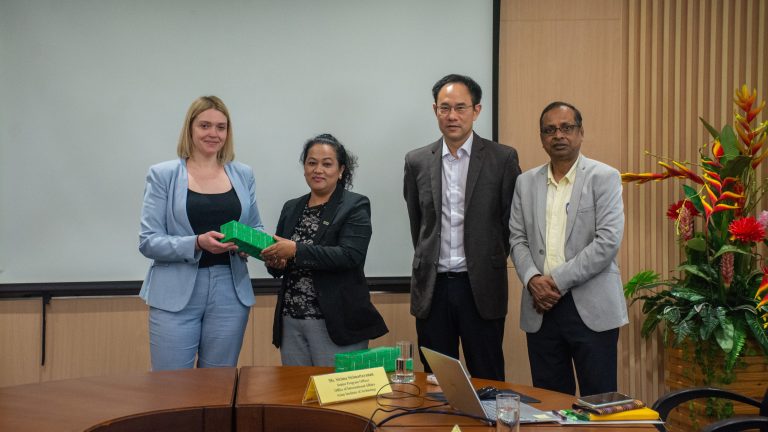
The Office of International Affairs (OIA) and the Office of Development & External Affairs (ODEA) of the Asian Institute of Technology (AIT) organised an introductory meeting with delegates from the University of Maribor, Slovenia, as part of their visit to AIT on 5 February 2026. The meeting aimed to introduce both institutions and explore potential collaboration opportunities between the University of Maribor and AIT’s centers. The Geoinformatics Center (GIC) team was invited to the meeting, along with Dr. Ekbordin Winijkul, Dean of the Faculty of Civil and Environmental Engineering and Associate Professor, EEM.
GIC and the University of Maribor have been working together in the ongoing Innovative Solutions for Plastic free European Rivers (INSPIRE) project, funded by the European Union and involving 26 partners. The project focuses on three key thematic areas related to plastic pollution in European rivers: detection, collection, and prevention, integrating 20 technologies and actions. The project was officially launched in June 2024 in Oostende, Belgium.
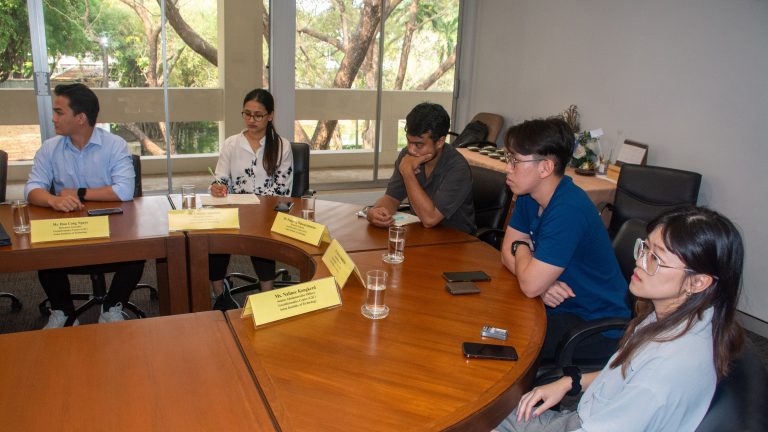
The GIC team was represented by Dr. Manzul K. Hazarika, Director of GIC; Ms. Nalinee Kongkerd; Ms. Ushnish Tuladhar; Mr. Karun Mooksrisai; Mr. Hau Nguyen and Mr. Pongpol Wipasuramonton.
Meeting Highlights
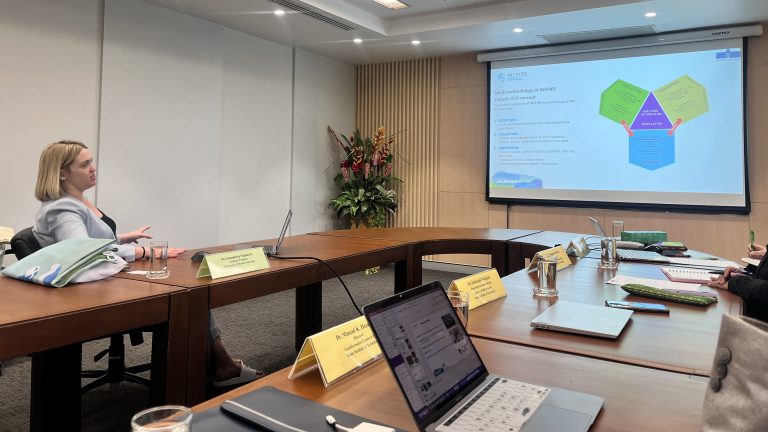
Dr. Annamaria Vujanović, Assistant Professor at the University of Maribor, Slovenia, introduced the INSPIRE project, outlining its framework, approach, and the plastic pollution challenges in Europe. She highlighted several plastic waste collection technologies, including CLERA, the Archimedean Drum Screen, floating booms, and others. She also explained the INSPIRE use-case flowsheet, showcasing how various technologies—such as those from Waste and Water (WNW), France, and CLERA.ONE, Slovenia—are integrated within the project. Dr. Vujanović emphasized the growing importance of linking plastic pollution impacts with human health, noting this as a potential area for future collaborative proposals.
Dr. Manzul K. Hazarika, Director of GIC, presented updates on GIC’s contributions to the INSPIRE project. He shared that GIC had shipped six AI-CCTV cameras to Italy for installation at two locations along the Po River. The pLitter AI-CCTV camera is one of the key technologies under the plastic detection category in INSPIRE. He also highlighted GIC’s contribution to the development of the “Monitoring and Analysis Protocols for Riverine Plastic Waste,” submitted to the European Commission. The session concluded with discussions on potential collaboration opportunities between the University of Maribor and AIT centers, including GIC.